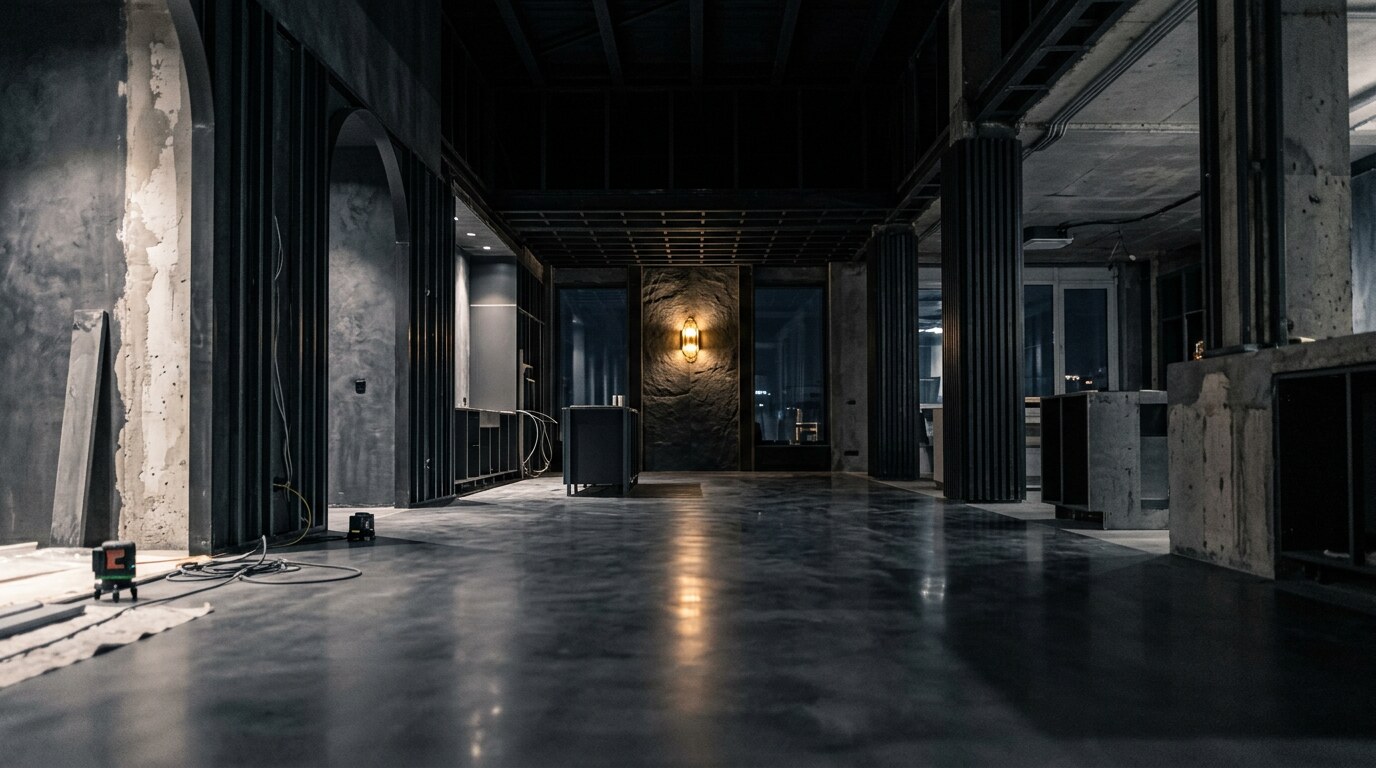
A correctly specified terrazzo slab is backed by standards, a CE marking and a Declaration of Performance. This guide sets out what to write into the specification and what to demand from the fabricator.
Terrazzo is an architecturally generous material, but it is also a regulated construction product, and a specification that treats it as a finish rather than a product leaves the design exposed. The goal of this guide is practical: to set out the standards, marks and documents that should anchor a terrazzo specification, so that what is delivered to site matches what was drawn, and so that the surface carries the legal and performance credentials a serious project requires.
Within the European market, factory-made terrazzo tiles and slabs fall under the Construction Products Regulation (Regulation (EU) No 305/2011, the CPR). Where a harmonised standard applies, the manufacturer must affix the CE marking and issue a Declaration of Performance, or DoP. The DoP is the document that legally binds the product to its declared performance; it is the single most useful piece of paper an architect can request, because it states, in one place, the characteristics the manufacturer is willing to stand behind.
The reference standard for terrazzo tiles is the EN 13748 family, which covers terrazzo tiles for internal use (Part 1) and for external use (Part 2), together with their performance requirements and test methods. When you specify to EN 13748 you are asking the fabricator to declare, and to have tested, characteristics that actually matter on site.
A specification is only as strong as the values it names. "Terrazzo to match sample" is an aspiration; "terrazzo to EN 13748 with declared flexural strength, abrasion class and slip resistance, evidenced by a current DoP" is a contract.
Reaction-to-fire classification is governed by EN 13501-1, which sorts construction products into the well-known Euroclasses from A1 to F. A mineral-rich terrazzo with an inert aggregate and a cementitious matrix typically achieves a very high classification, while resin content can influence the result, so the fire class should be confirmed for the specific system rather than assumed. The classification also depends on the substrate and build-up beneath the surface, which is why reaction-to-fire is declared for the product as installed rather than for the aggregate alone. For projects with defined fire-safety requirements, name the required Euroclass in the specification and require it to appear on the DoP.
A robust terrazzo clause does more than describe appearance. It should fix the visual intent — aggregate type and size, matrix colour, finish — against a control sample, and then pin the performance to standards and declared values. We recommend that an architect's specification require:
Finally, treat documentation as a deliverable, not an afterthought. Ask for the DoP and CE details before fabrication, not after delivery; request test evidence for the declared characteristics; and confirm that the bespoke mix you have approved is the one that will be cast and documented. A reputable Italian engineered-terrazzo supply chain will provide this without friction, and the architect who insists on it converts a beautiful surface into a properly evidenced, compliant and defensible specification. The discipline costs nothing on a project that is well supplied, and it protects everyone when a surface has to perform for decades rather than merely photograph well on handover.
A staircase is judged in the first step. Understanding R-classes, the relevant standards and nosing detail lets terrazzo deliver both beauty and a genuinely safe descent.
Read article→
Airports, hotels and retail floors endure relentless wear, yet terrazzo outlasts almost every alternative. The reasons lie in its density, its repairability and a specification matched to the load.
Read article→
Both deliver the unmistakable speckled beauty of terrazzo, yet they behave very differently underfoot, in colour and over decades. A clear-eyed comparison for specifiers.
Read article→