Airports, hotels and retail floors endure relentless wear, yet terrazzo outlasts almost every alternative. The reasons lie in its density, its repairability and a specification matched to the load.
There is a reason terrazzo lines the concourses of the world's busiest airports and the lobbies of its grandest hotels. Few materials withstand decades of continuous footfall, rolling loads and aggressive cleaning while still looking composed. In high-traffic commercial environments, terrazzo is not a decorative indulgence; it is one of the most rational long-term decisions a specifier can make. The performance, though, depends entirely on getting the specification right for the load.
Epoxy terrazzo is dense, hard and essentially monolithic. Marble and other aggregates are locked into a tough resin matrix, producing a surface with no grout lines to erode, no laminate to delaminate and no individual tiles to lift. Where a tiled floor fails at its weakest point, the joint, a terrazzo floor presents an unbroken, homogeneous wearing surface.
That continuity is the heart of its durability. There are simply fewer features to fail. The same density that makes terrazzo hard-wearing also makes it resistant to staining and chemical attack, which matters where spills, cleaning agents and constant traffic combine.
In a high-traffic building, the true cost of a floor is not what it costs to lay but what it costs to keep. Terrazzo wins on the second number, decisively.
Durability is not automatic; it is specified. The same material can thrive or struggle depending on how it is matched to its setting. Three considerations dominate commercial specification.
Get these right and the floor performs for the life of the building. Get them wrong and even the best material disappoints, which is why specification, not the terrazzo itself, is where commercial projects succeed or fail.
The economic case for terrazzo in commercial settings rests on its lifetime cost. Routine care is straightforward, regular cleaning with pH-neutral products and periodic polishing keep an epoxy floor performing indefinitely. There are no grout lines to scrub, no tiles to replace, no coatings to strip and renew on a cycle.
Crucially, terrazzo is renewable. A floor dulled or scuffed by years of traffic can be re-polished back to its original finish rather than replaced, and localised damage can be repaired and ground flush so the repair disappears into the field. Over a twenty or thirty-year horizon, this repairability transforms the cost comparison against materials that must be torn out and replaced.
For commercial fit-outs, prefabricated terrazzo brings a further advantage: speed and predictability in environments where downtime is expensive. Casting, vacuum-vibration consolidation, the ambient cure of 18 to 24 hours and multi-head polishing all happen off site, so a retail floor or hotel lobby can be installed as finished elements during a tight closure window rather than poured and cured in place over weeks of lost trading.
The best commercial terrazzo is planned around how the space is actually used. Traffic desire lines, entrance matting zones, wet areas and the position of fixtures all inform chip scale, colour, slip class and joint layout. A darker, more forgiving palette may suit a heavily used transit hall, while a hotel lobby can carry a bolder large-chip or Palladiana statement where wear is lighter. Matching the specification to the load, zone by zone, is what lets a single material serve a whole building for decades.
It is also worth noting that prefabricated elements arrive with their slip class already verified and their thickness calibrated, so the risk of inconsistency from field to field, common with in-situ pours, is all but eliminated before the material ever reaches the site.
Specified with care, terrazzo gives a commercial space a floor that absorbs punishing use, cleans easily, renews rather than wears out, and still looks deliberate long after cheaper alternatives have been replaced twice over.
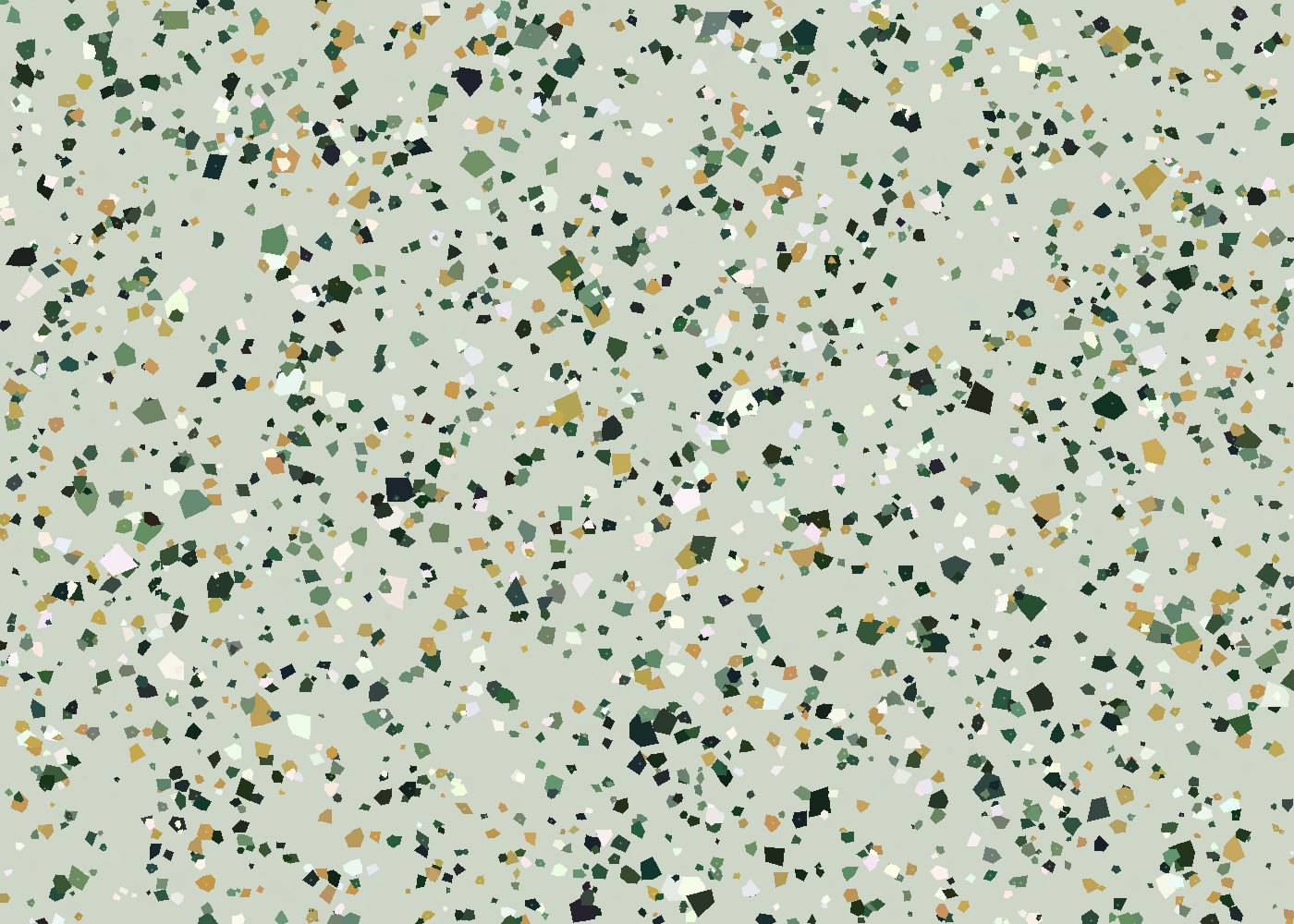
A staircase is judged in the first step. Understanding R-classes, the relevant standards and nosing detail lets terrazzo deliver both beauty and a genuinely safe descent.
Read article→
A correctly specified terrazzo slab is backed by standards, a CE marking and a Declaration of Performance. This guide sets out what to write into the specification and what to demand from the fabricator.
Read article→
Both deliver the unmistakable speckled beauty of terrazzo, yet they behave very differently underfoot, in colour and over decades. A clear-eyed comparison for specifiers.
Read article→