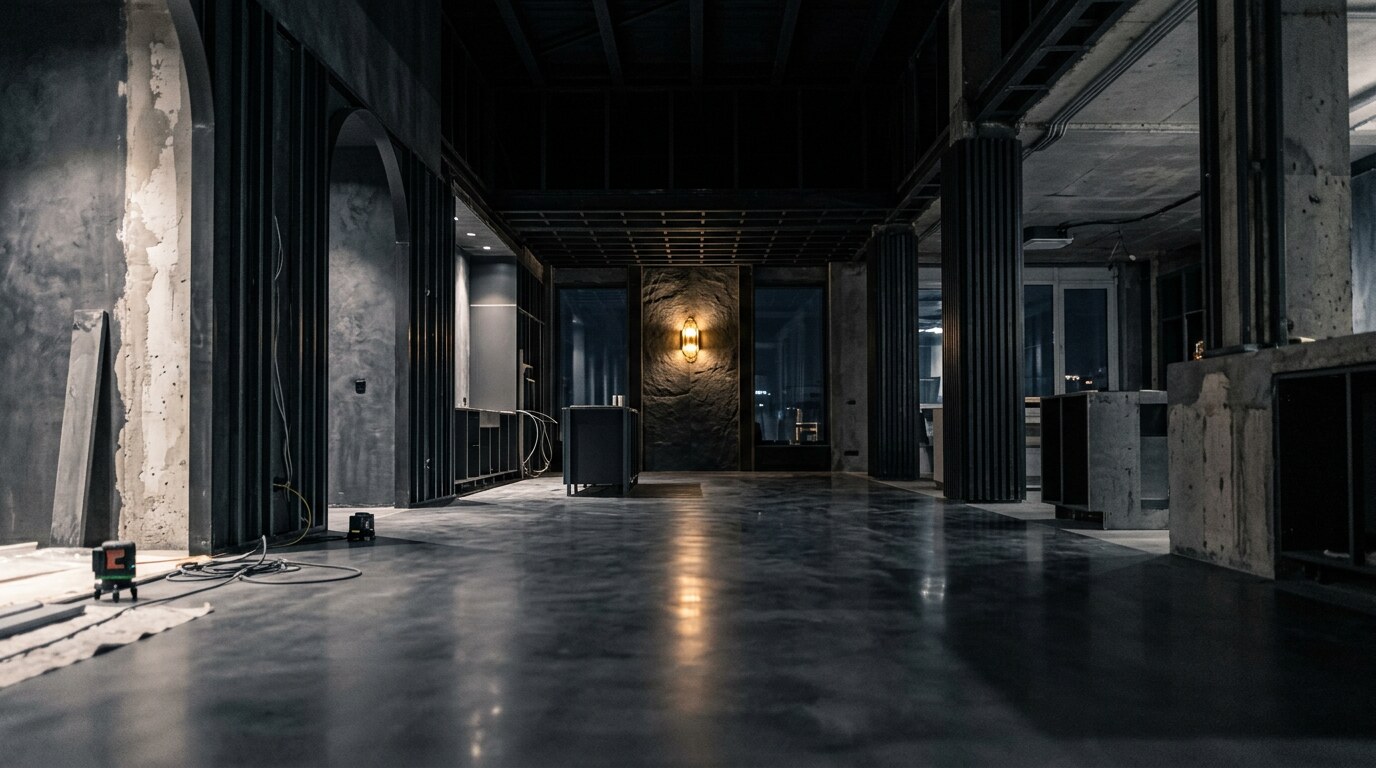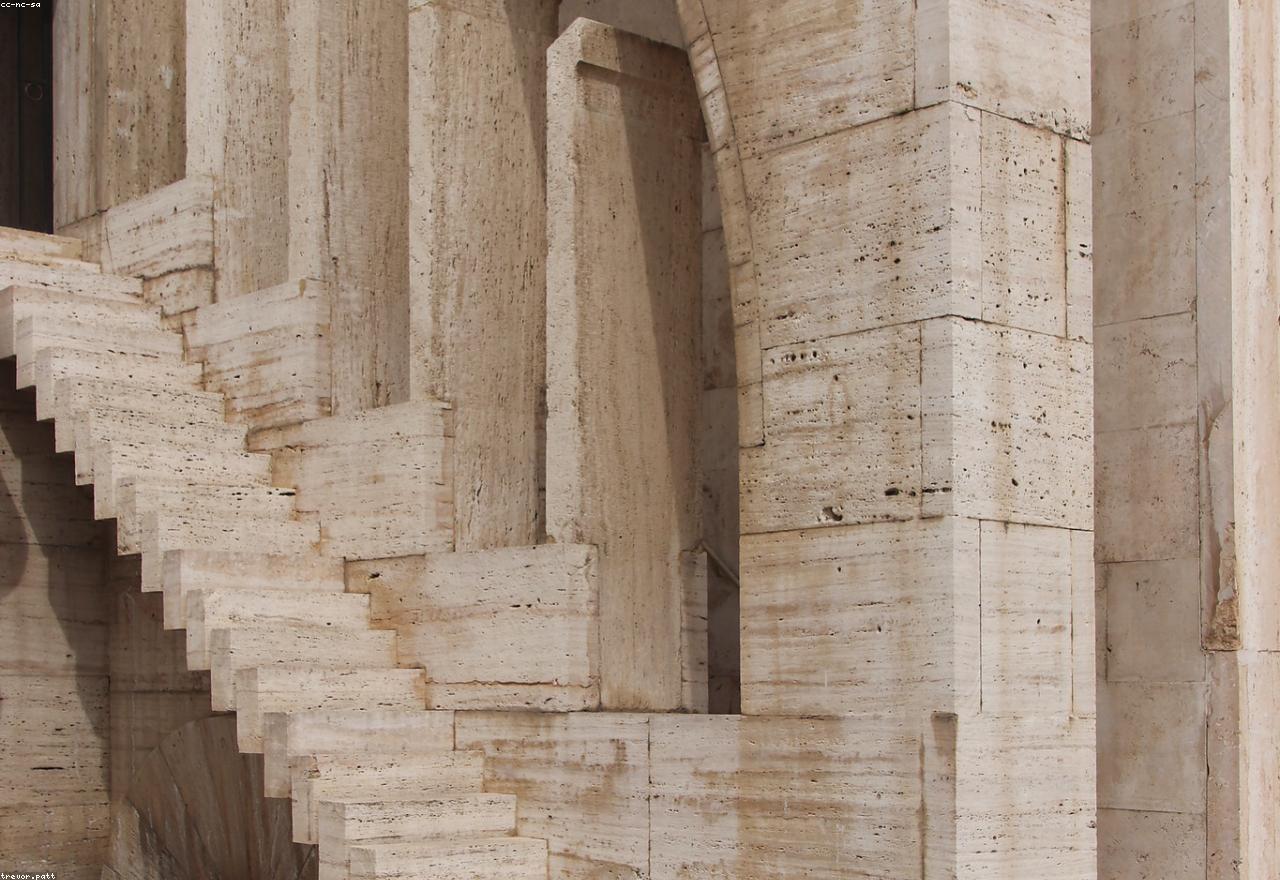
A single terrazzo stair tread passes through a dozen disciplined hands before it reaches site. We open the workshop doors on the craft behind the finish.
A finished terrazzo staircase looks effortless, a flowing run of polished stone that seems poured in a single gesture. The reality is a meticulously sequenced process that begins weeks earlier in the workshop, where each tread and riser is cast, cured, ground and finished to tolerances measured in fractions of a millimetre. Prefabrication is what allows that precision, and what protects the client's site from dust, delay and improvisation.
Everything starts with measurement. Site dimensions are surveyed and translated into shop drawings for every individual element, because a staircase is rarely a repeat of identical parts. From these drawings, formwork or moulds are built for each tread, riser and landing. Precision here is non-negotiable; an error of a millimetre in the mould becomes an error on every step.
With moulds ready, the terrazzo itself is mixed. For an epoxy system this means combining the two-component resin, base and hardener in exact ratio, then blending in pigment and the chosen aggregate. The mix is worked to disperse chips evenly and to eliminate trapped air, since voids will show as the surface is later ground. The charged mould is then left to cure, the resin hardening through chemical reaction into a dense, monolithic body.
Casting is the easy part; the soul of terrazzo is revealed only by grinding, when the buried aggregate is brought to the surface and the pattern finally appears.
Once cured, each element is demoulded and the long process of grinding begins. This is where a raw cast block becomes terrazzo. The surface is worked through progressively finer abrasives, each pass removing material and revealing more of the aggregate.
The final finish is also where slip performance is set. Treads destined for circulation can be calibrated toward an R10 finish, while stairs near spas, pools or entrances can be specified to R11 for greater wet grip, balancing safety against the tactile pleasure of polished stone.
Before anything leaves the workshop, each element is inspected for colour consistency, dimensional accuracy and surface integrity, then sealed to protect against staining. Working under controlled conditions allows colour batches to be matched across an entire flight, something almost impossible to guarantee with material poured in situ.
Only then are the components crated, numbered to a fixing plan and delivered. On site, installation becomes an assembly rather than a construction; finished treads are set in sequence, joints aligned, and the staircase appears with minimal mess and remarkable speed.
The advantages compound. The client gains a cleaner, faster site, predictable quality and a staircase whose every step matches its neighbours. The maker gains control over curing temperature, grinding depth and finish, the three variables that separate ordinary terrazzo from exceptional terrazzo. At Deco Interior, this discipline is the quiet engineering beneath surfaces that look, on the day they are unveiled, as though they simply grew there.
Casting terrazzo in a controlled factory rather than on site removes the slowest, most weather-dependent stages from the critical path, compressing installation to days instead of weeks.
Read article→
A finished DECO staircase begins as quarried marble and two-component resin. We trace the full journey through dosing, casting, vibration, curing, grinding, polishing and quality control.
Read article→
Both deliver the unmistakable speckled beauty of terrazzo, yet they behave very differently underfoot, in colour and over decades. A clear-eyed comparison for specifiers.
Read article→