A finished DECO staircase begins as quarried marble and two-component resin. We trace the full journey through dosing, casting, vibration, curing, grinding, polishing and quality control.
A polished epoxy terrazzo staircase arrives on site looking effortless, a single calm gesture of stone and colour. Behind that calm is a precise, multi-stage manufacturing process that begins in the quarry and ends only after every element has passed inspection. This is the journey a DECO element takes from raw material to finished tread.
Everything starts with the aggregate. Marble and other decorative stones are quarried, crushed and graded into consistent chip sizes, from fine grades for classic terrazzo to the large fragments used in Palladiana. The colour, hardness and grading of these aggregates are selected against the design before anything is mixed.
The second component is the binder: a two-part epoxy resin and hardener system. Unlike cement, epoxy cures by chemical reaction rather than evaporation, giving a dense, colour-stable matrix that locks the aggregate in place. Pigments are introduced here to achieve the specified ground colour, from cool greys to the warm clay and bone tones favoured in current work.
Production proper begins with dosing. The two epoxy components, pigment and graded aggregate are measured to precise ratios, because the resin-to-aggregate balance governs both the look and the strength of the final element. The components are then mixed to a uniform, void-free consistency in which every chip is fully wetted by resin.
The mixed material is cast into moulds shaped to the finished geometry, whether a slab, a tread, a riser or a complete staircase component. Mould preparation is meticulous; the mould face determines the back geometry and edges of the element, so accuracy here is accuracy in the final piece.
Once cast, each mould is consolidated by vacuum-vibration. Vibration settles the aggregate and drives out trapped air, while vacuum draws out micro-bubbles that would otherwise leave voids in the polished face. This step is what gives prefabricated terrazzo its characteristic density and flawless surface; it is extremely difficult to replicate by hand on site.
The consolidated elements then cure. Epoxy terrazzo undergoes an ambient cure of roughly 18 to 24 hours in stable, controlled conditions, during which the resin chemically hardens to full strength. Because this happens in the factory rather than on the project, the cure never delays the construction programme.
Curing is where prefabrication quietly wins. The 18-to-24-hour wait that would freeze a site happens in our plant, in parallel with the rest of the build, and costs the project no time at all.
After curing, elements are demoulded, revealing a solid but as-yet unrefined block: dense and true, but with the aggregate still buried beneath a skin of resin.
The surface is brought to life on the calibrating and polishing line. Grinding first removes the resin skin and calibrates each element to a precise, uniform thickness, exposing the cross-sections of the marble chips that give terrazzo its depth.
Then comes the multi-head polishing sequence. A series of abrasive heads of progressively finer grit passes over the surface, each refining the work of the last, until the terrazzo reaches its specified finish, from a soft honed matt to a deep mirror polish. The slip class is engineered at this stage, since the final polish level directly governs how the surface performs underfoot.
Epoxy terrazzo is dense and largely self-sealing, but a final treatment optimises stain resistance and ease of maintenance for the element's intended use. With the surface complete, each piece undergoes quality control: dimensions and thickness are checked against tolerance, the finish and slip class are verified, and the surface is inspected for any chips, voids or colour inconsistency. Only elements that pass are released.
What leaves our facility is not a process but a product, a calibrated, polished, sealed and inspected staircase ready to install. On site the work is reduced to careful assembly: positioning, bedding and jointing finished elements, with no pouring, grinding or curing to manage in the building. The long, exacting journey from quarry to staircase has, by then, already been completed under controlled conditions, and what the client sees is only the result.
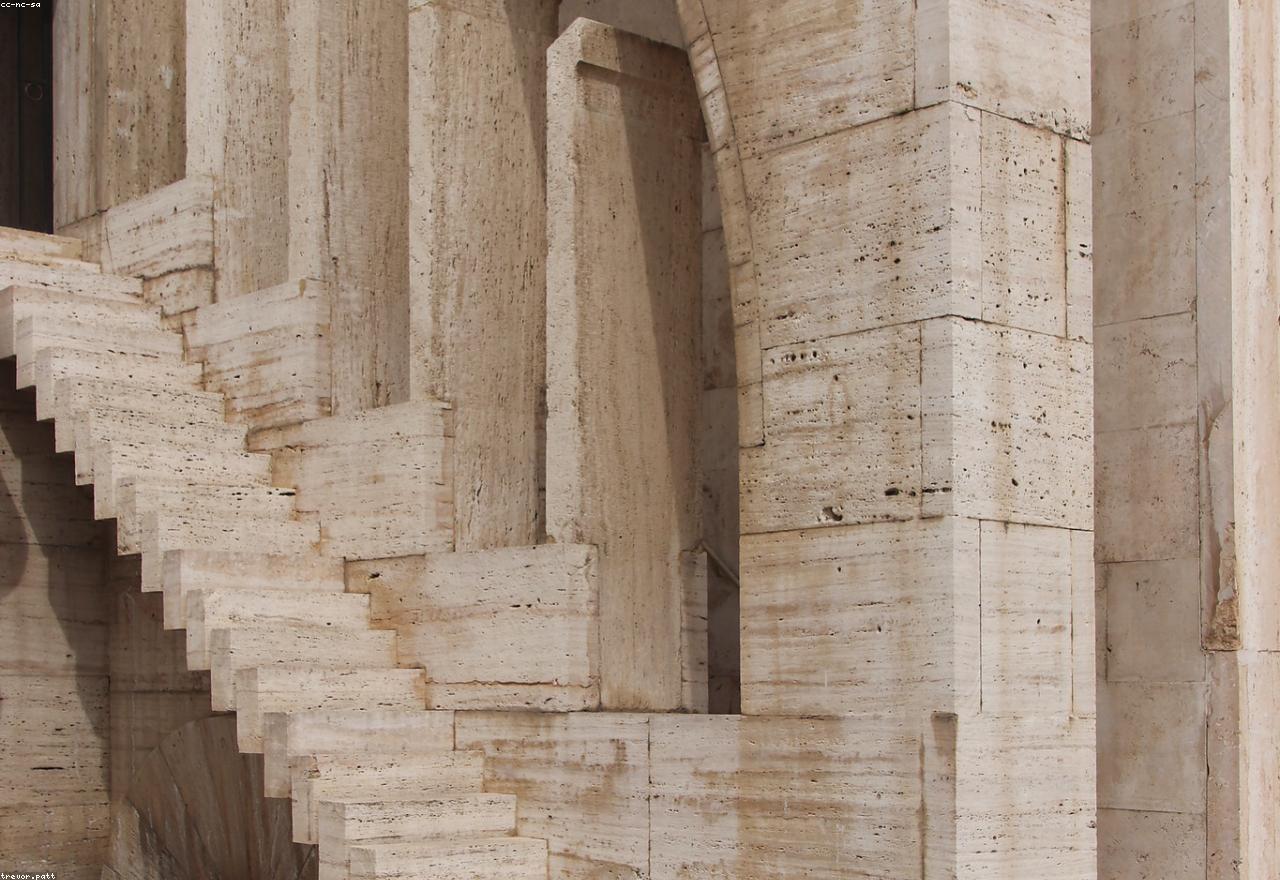
A single terrazzo stair tread passes through a dozen disciplined hands before it reaches site. We open the workshop doors on the craft behind the finish.
Read article→
Casting terrazzo in a controlled factory rather than on site removes the slowest, most weather-dependent stages from the critical path, compressing installation to days instead of weeks.
Read article→
Both deliver the unmistakable speckled beauty of terrazzo, yet they behave very differently underfoot, in colour and over decades. A clear-eyed comparison for specifiers.
Read article→