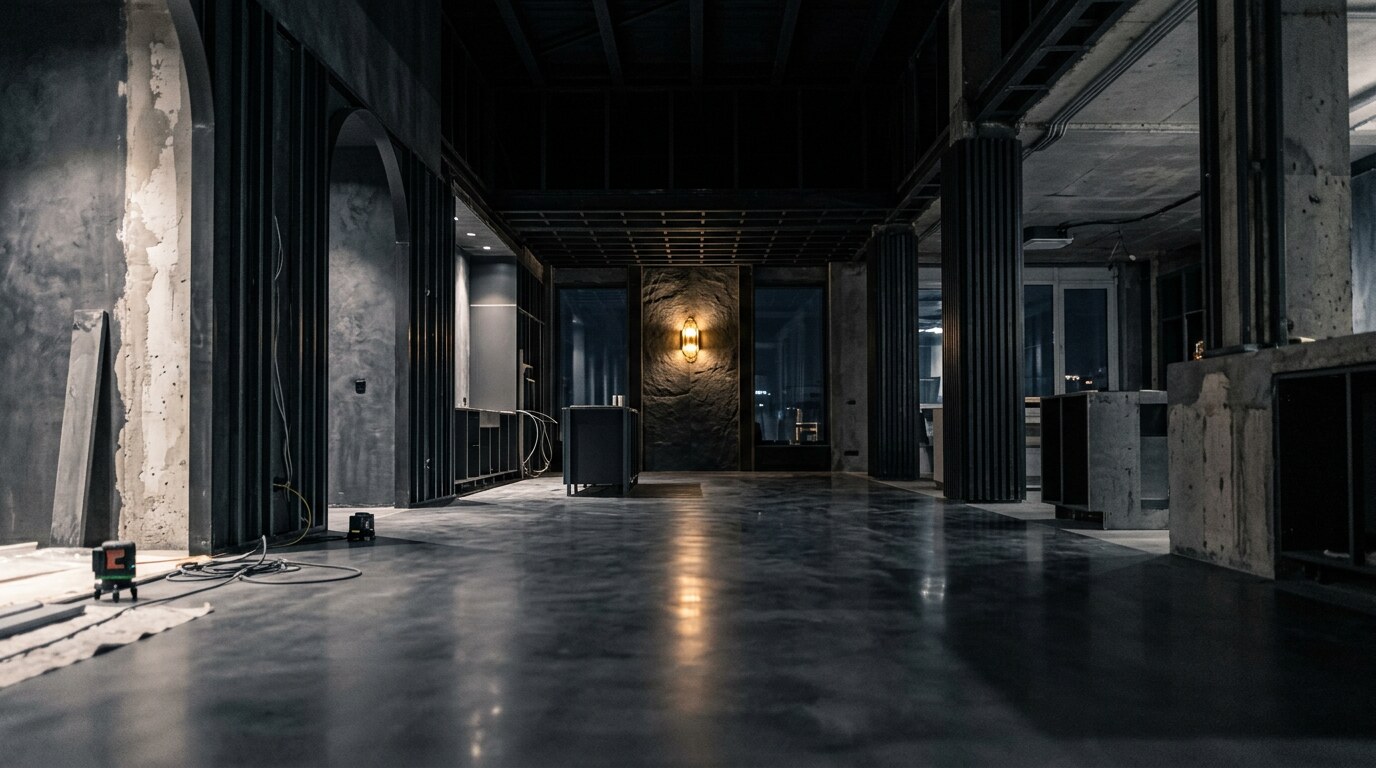
Casting terrazzo in a controlled factory rather than on site removes the slowest, most weather-dependent stages from the critical path, compressing installation to days instead of weeks.
On any construction programme, the finishes phase is where schedules quietly unravel. Traditional cast-in-place terrazzo is among the worst offenders: it demands days of pouring, grinding and curing on the live floor, all of it dependent on ambient conditions and the availability of skilled trades. Prefabrication rewrites that equation. By casting epoxy terrazzo as finished elements in a controlled factory, DECO removes the slowest stages from the project's critical path and delivers components that install in a fraction of the time.
Poured-in-place terrazzo turns a finished room into a workshop. Aggregate and binder are mixed and trowelled on the floor, then left to cure before anyone can grind it. Each of those steps competes for the same square metres with every other trade, and none can begin until the substrate is dry, level and warm enough for the resin to chemically cure.
Weather and temperature dictate the pace. Resin systems have a defined working window, and a cold or humid week can stall an entire floor. The result is a sequence that is inherently serial, fragile and difficult to recover once it slips.
In our facility, casting, vacuum-vibration consolidation and the ambient cure of 18 to 24 hours all happen off the critical path, in parallel with structural and envelope works on site. Calibrating and multi-head polishing are completed before an element ever leaves the building. The factory delivers a finished surface, not a process.
Because production runs concurrently with the rest of the build, the terrazzo is effectively manufactured during time that would otherwise be idle for the finishes contractor.
The headline is speed, but the deeper value is certainty. A prefabricated staircase or slab has a known weight, dimension and finish before it reaches the threshold. Setting out can be planned to the millimetre, deliveries sequenced to the install crew, and the programme committed with confidence.
A poured floor is a promise; a prefabricated element is a delivery. One is hostage to the weather and the trade calendar, the other arrives on a date you can put in writing.
That predictability compounds. Fewer wet trades on site means fewer protection regimes, less reworking of adjacent finishes, and a cleaner handover. Quality control happens in the plant under good light and measured tolerances, so defects are caught before transport rather than discovered after installation.
On site, the work becomes assembly rather than fabrication. Treads, risers and slabs are positioned, bedded and jointed by a small crew. There is no pour to nurse, no grind to schedule, no cure to wait out. A staircase that might consume a fortnight of in-situ work can be set in a day or two, with the surface protected and immediately ready for the trades that follow.
The benefit is greatest when prefabrication is considered early. Sharing setting-out dimensions and structural openings at design stage lets us optimise element sizes, joint positions and chip layout, including large-chip Palladiana that would be punishing to execute by hand on site. Coordinating the manufacturing window against the build sequence ensures elements are ready exactly when the site can receive them, not stored at cost or rushed at risk.
Project managers think in terms of the critical path, the chain of tasks that dictates the earliest possible completion. Cast-in-place terrazzo sits squarely on it: nothing can follow until the pour has cured and been ground. Prefabrication lifts the bulk of that work off the path entirely, leaving only a short assembly task in its place. The float this creates can be spent elsewhere, or simply handed back to the programme as time saved. On a phased fit-out, that recovered time often makes the difference between hitting a handover date and missing it.
Prefabrication does not merely make terrazzo faster to install. It moves the difficult, slow and weather-bound work into an environment built to absorb it, and hands the project a finished surface on a date it can rely on.
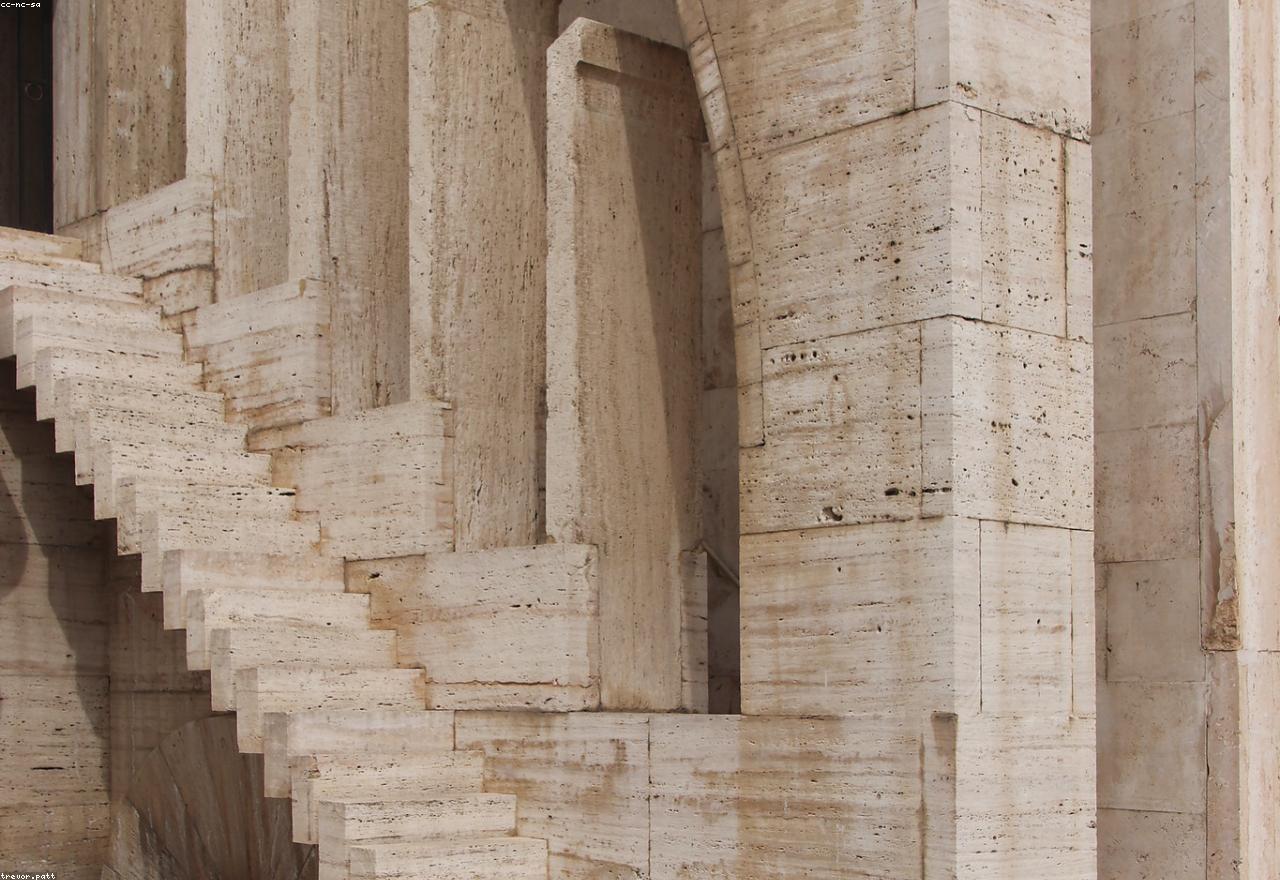
A single terrazzo stair tread passes through a dozen disciplined hands before it reaches site. We open the workshop doors on the craft behind the finish.
Read article→
A finished DECO staircase begins as quarried marble and two-component resin. We trace the full journey through dosing, casting, vibration, curing, grinding, polishing and quality control.
Read article→
Both deliver the unmistakable speckled beauty of terrazzo, yet they behave very differently underfoot, in colour and over decades. A clear-eyed comparison for specifiers.
Read article→